8.28.2010

Cool predatory insects

I was struck by how beautiful and impressive this dragonfly was.


Southeastern Spinyleg (Dromogomphus armatus)


I recently took this short video of a female solitary wasp carrying a subdued Broad-tipped Conehead (Neoconocephalus triops), which is a type of katydid, down into a burrow in which the wasp will lay a single egg. When the egg hatches, the young wasp larva will begin feeding on the katydid until it is fully grown and can metamorphose into an adult wasp. It will then go find a mate, breed, and begin the cycle once again. I was impressed by seeing the wasp actually fly in with something that is close to twice its size!

8.16.2010

Gulf Saltmarsh Snake and other neat herps

I was excited to finally get a chance to photograph a Gulf Saltmarsh Snake. I had seen them in the past, but without a camera. The other species are simply ones I've enjoyed seeing in the past few weeks.


Gulf Saltmarsh Snake (Nerodia clarkii clarkii)


Cottonmouth (Agkistrodon piscivorus)


male Six-lined Racerunner (Aspidoscelis sexlineata sexlineata)


River Frog (Lithobates heckscheri)

8.12.2010

Trapdoor Spider

Living in Florida, I don't get to see tarantulas like I did when we were in Texas. While not as large, Trapdoor spiders are a really neat relative of tarantulas. Here's a male that I found crossing a road recently.


Trapdoor spider (Ummidia sp)

Trapdoor spiders are so named because they build burrows in the ground, and cover the entrance with a hinged, camouflaged "trapdoor." They wait inside for vibrations of potential prey near their entrance, throw open the door, and grab the unsuspecting prey.

7.31.2010

NW Florida beach snorkeling

While out surf fishing with a couple friends this week, I went out snorkeling to see what things looked like where we were casting our lines. Since we were mostly catching fish that we didn't care to eat, I wasn't missing out on anything too important.


Atlantic Mole Crab (Emerita talpoida)
"Sand flea"


Lettered Olive (Oliva sayana)


Shark Eye (Polinices duplicatus)


Roughtail Stingray (Dasyatis centroura)


Smooth Butterfly Ray (Gymnura micrura)


Gulf Kingfish (Menticirrhus littoralis)


Florida Pompano (Trachinotus carolinus)


Leatherjacket (Oligoplites saurus)


Hardhead Catfish (Ariopsis felis)


juvenile Great Barracuda (Sphyraena barracuda) and Ladyfish (Elops saurus)


Gulf Flounder (Paralichthys albigutta)


Sharksucker (Echeneis naucrates)

This little Sharksucker followed us for about a half hour and would almost stick onto me while I was swimming; occasionally venturing away from me just long enough to grab little morsels before returning. I had assumed there wouldn't be all that much to see along our sandy beaches, so was pleasantly surprised to see such an interesting variety of animal life.

6.30.2010

Milkweeds!

I've always enjoyed milkweeds. I remember breaking off the developing seed pods as a child and seeing the white, milky sap flowing from the break. Because I really enjoyed butterflies while growing up in Minnesota, making the connection between milkweeds and Monarch Butterflies (Danaus plexippus) solidified milkweeds' place in my mind as a noteworthy type of plant. The following species are ones I've found around where I live and work in the Western Florida panhandle.


Butterfly Milkweed (Asclepias tuberosa)


Clasping Milkweed (Asclepias amplexicaulis)


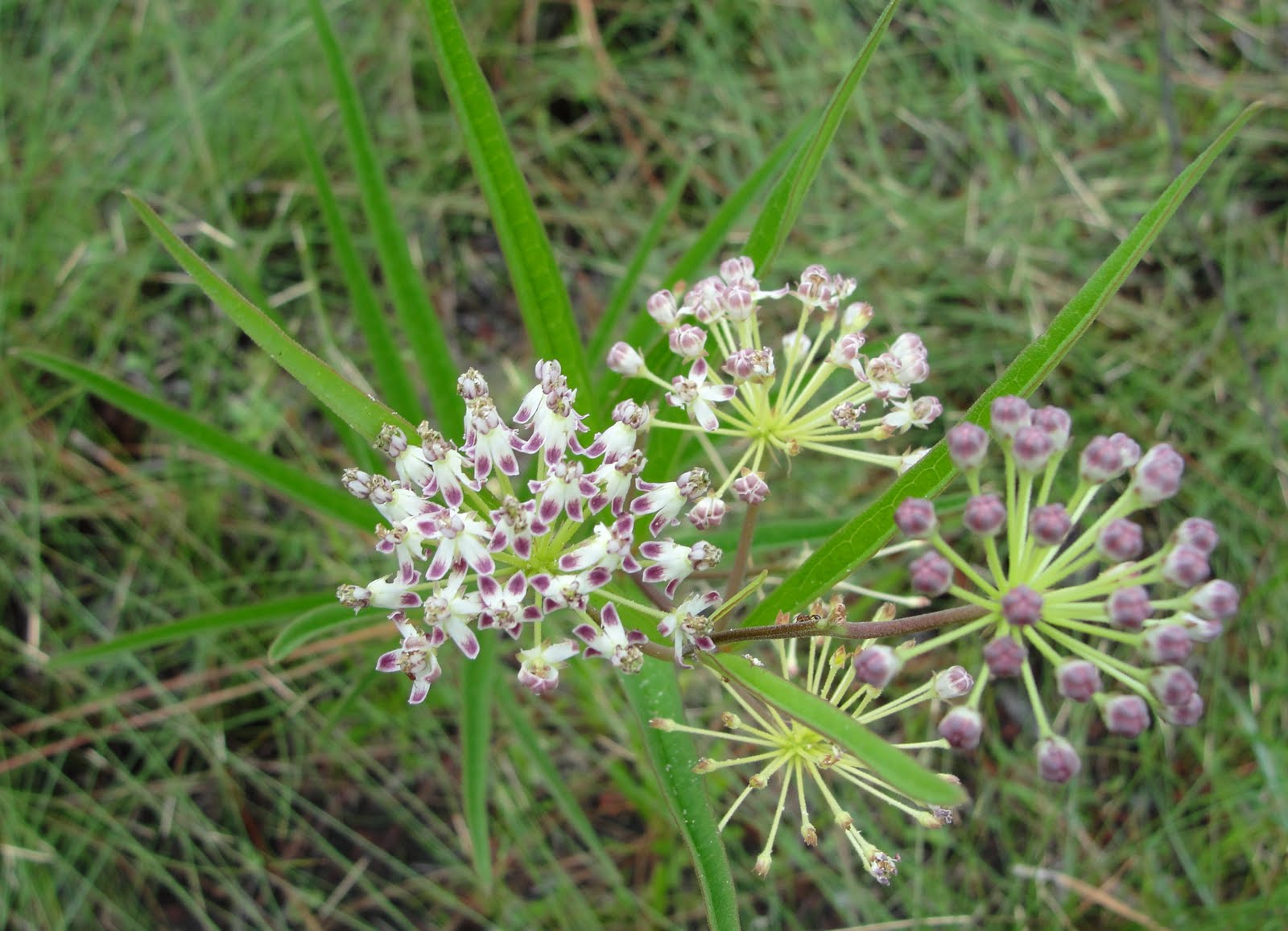
Longleaf Milkweed (Asclepias longifolia)


Largeflower Milkweed (Asclepias connivens)


Whorled Milkweed (Asclepias verticillata)


Pineland Milkweed (Asclepias obovata)


Carolina Milkweed (Asclepias cinerea)


Pinewoods milkweed (Asclepias humistrata)


Michaux's milkweed (Asclepias michauxii)


Savannah milkweed (Asclepias pedicellata)

6.24.2010

Assorted goodies and more cool snakes

Though busy with stuff, I've still been fortunate to see some cool things recently. High on the list is my first fully-grown adult Reticulated Flatwoods Salamander.


Adult Reticulated Flatwoods Salamander (Ambystoma bishopi)


Adult Mole Salamander (Ambystoma talpoideum)


Dwarf Salamander (Eurycea cf quadridigitata)


Three-lined Salamander (Eurycea guttolineata)
This one was found by Sam, our seasonal hire working on birds, who has a great eye for spotting cool things like this.


Pine Barrens Treefrog (Hyla andersonii)


Pine Barrens Treefrog eggs in shallow acidic pool


This next one is a really special one. It may not be quite as rare as some of the other species I've gotten to see, but it may be one of the more difficult to find. My friend John spotted this in the Eastern panhandle of Florida. Because there aren't many photos of this species available online, I've included a few different angles here.


Mimic Glass Lizard (Ophisaurus mimicus)


Mimic Glass Lizard


Mimic Glass Lizard


Mimic Glass Lizard


What a shame that so many folks hate snakes. Every time I see a snake that I don't see very often, I'm reminded of how much amazing diversity of form and habit there is across even our local snakes in the Southeastern US. Here are a few that I've greatly enjoyed seeing in recent weeks.


Southern Black Racer (Coluber constrictor priapus)
Though quite common to see, this species deserves an appreciative closer look once in a while. I love the simple elegance of shiny black, combined with acute eyesight and impressive quickness.


Queen Snake (Regina septemvittata)
This is the first of this species that I've found. This one was basking over one of our beautiful, clear, sandy streams. Like all other species in the genus regina, it specializes in eating crayfish. Thanks to John for encouraging me to take a closer look at these photos, as I had assumed any crayfish snake around here would be Gulf Crayfish Snake (Regina rigida).


Southern Hognose Snake (Heterodon simus)
This is only the second one that I've been fortunate enough to find. I think Sturgeonnose snake would be a better descriptive name, but doesn't really roll off the tongue too well.


Southern Hognose Snake feigning death


Juvenile Eastern Diamondback Rattlesnake (Crotalus adamanteus)


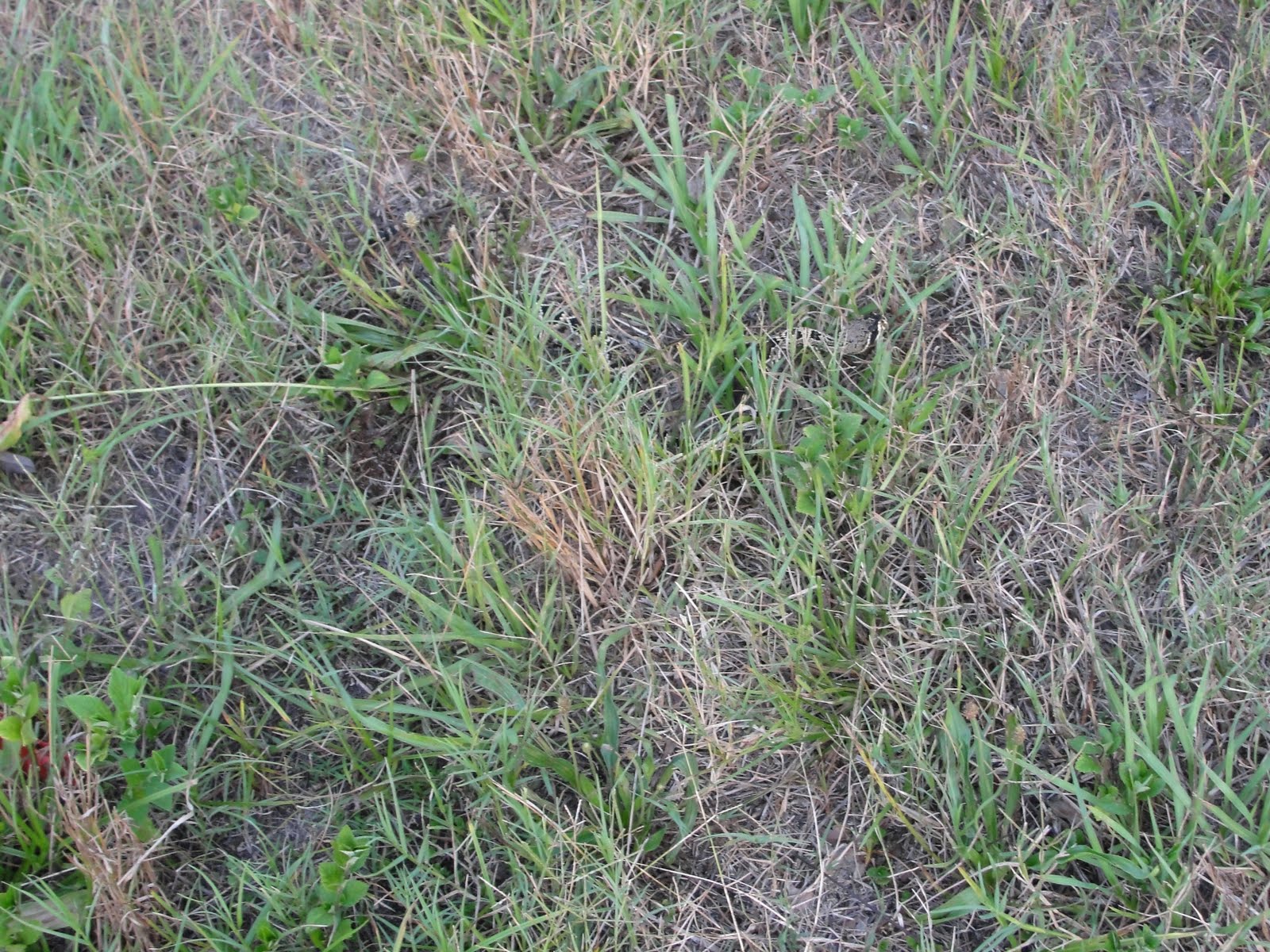
Eastern Diamondback Rattlesnake in short grass, showing how well they can blend in with even a little bit of vegetation as cover