4.29.2007

Some neat stuff from this week

As the seasons progress, new waves of wildflowers replace or add to the ones preceding them.


Sarah and I were excited to see our first blooming Lace Cactus(Echinocereus reichenbachii).


This Indian Paintbrush (Castilleja sp.) had great color, and stood out among the more common flowers in the area.


The American Lady (Vanessa virginiensis) is usually seen with open wings from above, which are mostly orange and black. I included this photo because I think the more intricately patterned and colored underside is often unnoticed or underappreciated.


This is an Ironclad Beetle (Zopherus nodulosus) that I found under a log. I like finding oddballs like this.

4.26.2007

Anuhuac NWR, High Island, and Bolivar Peninsula

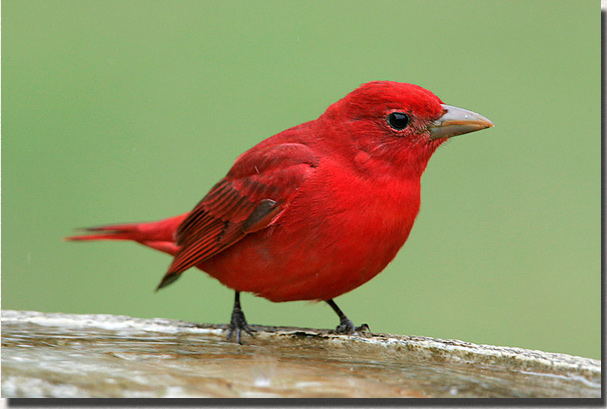
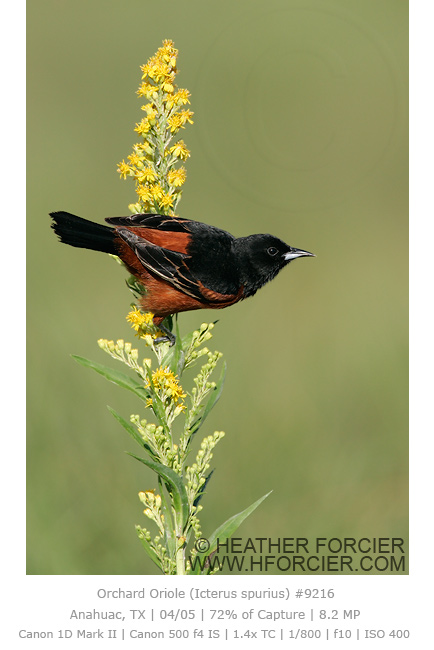
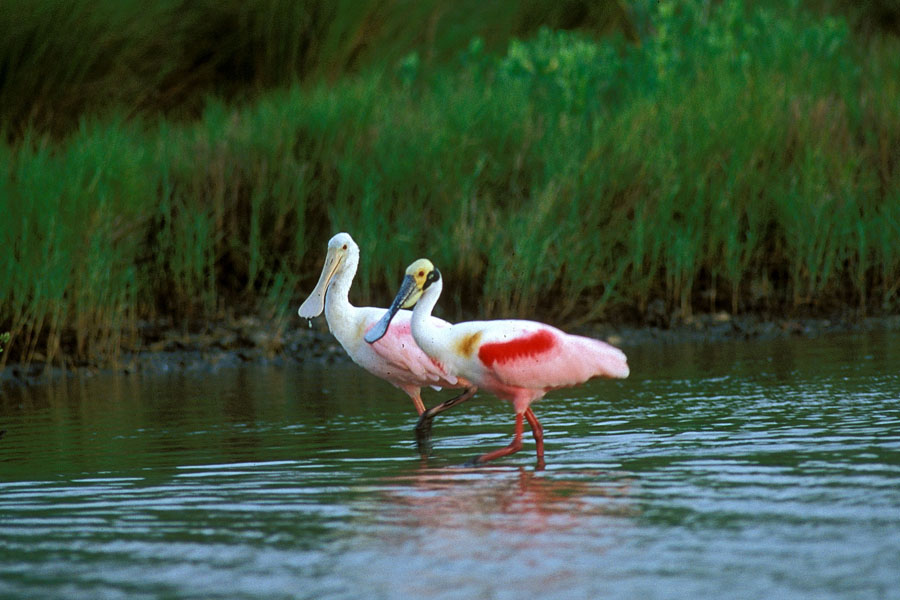
This past weekend, we went on a long-awaited trip to the upper Texas coast to see some migrating birds. The songbirds weren't as diverse as expected, but its hard to complain when we were constantly seeing Scarlet Tanagers, Summer Tanagers, Rose-breasted Grosbeaks, Blue Grosbeaks, Baltimore Orioles, and Orchard Orioles. We also saw really neat looks at Roseate Spoonbills, Purple Gallinules, and even a secretive Least Bittern. Unfortunately, I don't have the right camera to capture those beauties. But here are some consolation prizes.


We got up early and were rewarded with a beautiful sunrise on our way to the coast.


We saw a number of cool serpents, but my favorite was probably this Western Cottonmouth (Agkistrodon piscivorus leucostoma). It put on a nice show for us, including flattening itself and showing the strikingly white mouth for which it gets its name.


We went night driving for more snakes, but didn't see any. However, we did see my first wild Green Treefrogs (Hyla cinerea)...


...and this neat little fiddler crab (Uca spp.).


These are the first American Avocets (Recurvirostra americana) I have seen in breeding plumage (some are still in molt). Also in photo: Reddish Egret (Egretta rufescens), Brown Pelican (Pelacanus occidentalis), American White Pelican (Pelecanus eyrthrorhynchos), and Willet (Catoptrophorus semipalmatus).

4.15.2007

Neat Texas Critters


This is the Red-headed subspecies of the Giant Desert Centipede (Scolopendra heros castaneiceps). This is one of the largest centipede species in the world, with adults topping out at over eight inches. I think that anyone who can get past their aversion to "creepy crawlies" will recognize this as a very beautiful part of God's creation.


Here's a risk-free opportunity for you to get a good look at a hornet. I've always thought they have great faces; kind of a cross between an alien face and a cool motorcycle helmet.

4.05.2007

Photos from the past couple days


This is an Eight-spotted Forester Moth (Alypia wittfeldii). They really are striking.


This is a Reakirt's Blue (Hemiargus isola).


This male Plains Clubtail (Gomphus externus) was a new dragonfly for me. It posed nicely.


I put this Antlion larva (Myrmeleon sp.) on here for my brother Alex. Alex, you know why.

4.01.2007

Random stuff I liked seeing


This beetle is aptly called a caterpillar hunter (Calosoma scrutator). It's fun to watch them catch the light as they search and find caterpillars eating the fresh spring foliage.


Texas has great wildflowers. This one is in the iris family.


This Rough Green Snake (Opheodrys aestivus) is one of three I've been fortunate enough to see here so far.


I just can't help but to like this little oak seedling.

3.31.2007

Red-spotted Purple


Red-spotted Purple (Limenitis arthemis) is one of the more "cooperative" butterflies when it comes to getting close for a good look or a photo. With some things, using a flash up close washes out the color. With this, it helped bring out the blue iridescence. This species makes a harmless and tasty meal for any bird brave enough to eat one, but many get passed up because they resemble the toxic Pipevine Swallowtail.

3.26.2007

Red in black, venom lack; red in yellow, kill a fellow...


This past weekend while visiting Brendan and Billi, we saw a snake that we've been looking forward to seeing for years. We found this Coral Snake (Micrurus tener) under a large sheet of bark on an old pine snag near Nacogdoches, TX. Although the neurotoxic venom from this species can be lethal to an adult human, Coral Snakes tend not to be very aggressive, and we were extremely careful while handling this one.

3.13.2007

Golden-cheeked Warblers!

Yesterday, I got to see my first two Golden-cheeked Warblers (Dendroica chrysoparia). Today, a few of us got to catch them. I felt pretty nervous taking an endangered bird out of a net, but I think I'll get more used to it as I go.

3.12.2007

Rio Grande Valley Trip

Sarah and I went with our friend Billi on a short but exciting trip to the southernmost part of Texas. We focused on birds, but enjoyed a lot more. We identified about 130 species of birds on the 2.5 day trip, and 33 of them were lifers for me.


A bird that I'd been looking forward to seeing since the first time I saw it in a fieldguide, the Green Jay (Cyanocorax yncas) was every bit as beautiful as I expected.


This happened to be the nearest of a few American Alligators (Alligator mississippiensis) that we were fortunate enough to see at Aransas National Wildlife Refuge, where we also got to see the endangered Whooping Cranes (Grus americana) on their wintering grounds.


These Texas leaf cutting ants (Atta texanus) were an unexpected treat at our first campsite, on the Rio Grande in Salineno, TX.


I thought it fitting to have our first sighting of the Rio Grande Leopard Frog (Rana berlandieri) on the Rio Grande (their range extends over 300 miles from the Rio Grande).


Definitely one of my favorites from this trip, this Texas Tortoise (Gopherus berlandieri) was right out in the open, munching on grass at Bentsen Rio Grande State Park.

3.11.2007

Fort Hood so far

My job on Fort Hood has begun, and although I've not yet seen a Golden-cheeked Warbler, there has been some neat stuff to keep my attention.


I was pleased to get this 'Olive' Juniper Hairstreak (Callophrys gryneus) and a Great Purple Hairstreak (Atlides halesus) in the same shot on this Elbow bush (Forestiera pubescens).


Though not rare, these Northern Cardinals (Cardinalis cardinalis) were fun to see up close.


This flower may be some type of phlox, but I'm not sure. Either way, I think it's pretty.


This Black-crested Titmouse (Baeolophus atricristatus) was a recent lifer for me, so it was fun to get to hold one. They're very spirited.


This Striped Bark Scorpion (Centruroides vittatus) was my first wild scorpion. Good reminder that I'm in Texas.


Does this remind anyone of Lord of the Rings?