Showing posts with label trips. Show all posts

11.28.2008

Southern Appalachian Herps etc. from last Spring

This past Spring, Brendan and I took a trip up through the Southern Appalachians, looking for anything we could find in a variety of habitats. We found a lot of great stuff, but my camera went kaput part way through the trip, so I didn't get a lot of the photos I wanted, but I still have good memories of what I saw... just harder to share.

Since we focused primarily on salamanders, I'll begin with some of them.

These bright orange and black Cave Salamanders (Eurycea lucifuga) are one of my favorites (not sure how many favorites I have). They really like the twilight zones of caves, where they are adept at roving along vertical surfaces, as well as hiding in tight crevices, sometimes in groups (below).


Pigeon Mountain Salamanders (Plethodon petraeus) are also found in the twilight zone, but where Cave Salamanders can be found in at least 13 states, Pigeon Mountain Salamanders only occur in caves around Pigeon Mountain in NW Georgia. One neat thing about this species is that the brown blotching on their backs allows them to blend in very well in the clay-covered surfaces just inside the cave entrance.


I'll never complain (I actually probably will) about easy-to-find animals that I'm interested in finding, but sometimes it's more satisfying to have to climb to the top of a mountain to find the subject of interest. That was the case for the five Weller's Salamanders (Plethodon welleri) that I was fortunate enough to find. Their patchy metallic markings on a black background color is very beautiful to me.


Oddly-colored Eastern Redback Salamanders (Plethodon cinereus) were found in slightly lower elevations in the same general area as the Weller's. They usually don't exhibit metallic markings on the head and tail like this one. It made me wonder if there is some hybridization going on.


Another high-elevation species is the Jordan's Salamander (Plethodon jordani). The simplicity of an all black animal with red cheek patches makes for a very pleasing appearance. Unfortunately, my camera died before I got a photo I really liked of this species (yeah, I'm making excuses).


Once considered part of the same species, the Northern Graycheek Salamander (Plethodon montanus) is almost identical to Jordan's Salamander but for the gray cheeks instead of red.


This Chattahoochee Slimy Salamander (Plethodon chattahoochee) is one of 13 slimy salamander species, all of which exhibit the general white spots on black pattern, though each with unique differences.


Salamanders in the genus Desmognathus have only mildly interested me in the past, but my appreciation has grown as I've seen more of their diversity of appearance and habits. The semi-aquatic Blackbelly Salamander (Desmognathus quadramaculatus) is the largest species in the genus, topping out at over eight inches.


The more terrestrial Pygmy Salamander (Desmognathus wrighti) is on the other end of the size spectrum, not exceeding two inches. They usually aren't found on orchid leaves unless I put them there for a photo.


We saw a few frogs and toads, including this Upland Chorus Frog metamorph (Pseudacris feriarum).

Now, for some bonus non-herp material before getting to the snakes.


When limited on time, we resort to herping more and resting less. Occasionally, a tired herper needs a good Dogfish Head 60-minute IPA as refreshment. This was right before heading up a mountain.


There were lots of beautiful Spring flowers blooming in some areas, including this iris...


...and these trilliums.


In the cave at Pigeon Mountain, Eastern Pipistrelle Bats (Pipistrellus subflavus) were constantly flying past me, sometimes even briefly landing on me. This one was cleaning itself while taking a break from hunting.


My excursions take me through some interesting areas, both naturally and culturally. This hippy-style pizza place on a river in the middle of nowhere was a welcome sight at lunch time one day.

Though it was still a bit cool in some areas, there were some snakes on the move.
This young Timber Rattlesnake (Crotalus horridus) was an exciting find crossing the road at night.


This Eastern Worm Snake (Carphophis amoenus amoenus) was found near the entrance to a cave.


Northern Ringneck Snakes (Diadophis punctatus edwardsii) can be abundant under logs and rocks in some areas. These two were found under the same rock.


This young Eastern Kingsnake (Lampropeltis getula getula) was only the second one I've seen, but it was the first one I've had a chance to photograph. Its perfect shiny scales made me think it had recently shed. King snakes eat other snakes; sometimes venomous ones, whose venom they are impervious to.

5.19.2008

March Texas trip

Over Easter weekend, Sarah and I were able to join our friends Brendan and Billi for a short trip to the lower Rio Grande valley of Texas. This was our second time in the area, and it was great to be back.

The following three photos are of 1) a female Barn Owl (Tyto alba) incubating eggs on a ledge in an old well, 2) the same owl perched on the far wall from it's nest, with a 5' Western Diamondback Rattlesnake (Crotalus atrox) resting on a slanted board below, and 3) the owl's eggs where it had been sitting earlier.


This is one of the beautiful and large Blue Spiny Lizards (Sceloporus serrifer) that we saw.


This is the first of three Western Diamondback Rattlesnakes that we were to see on our trip.


5.13.2008

Six years and counting

Kelly and I celebrated our 6-year anniversary on May 4. It's hard to believe it's been that long, but you know what they say about how time flies...

To celebrate, we did something we've been waiting years to do -- We went to a Radiohead concert! We both love Radiohead, but since they're from the U.K., they don't often tour in the U.S. We have been afraid the band would break up before we'd get the chance to see them in concert. But with the release of their new album, In Rainbows, they scheduled a U.S. tour -- and the first stop was West Palm Beach, FL. We drove all the way across the state to celebrate six amazing years of marriage and hear one of our favorite bands perform an incredible live show. (See our Radiohead Concert post if you're interested in photos and video from the show.)

We also did some cool birding, which took us through Miami (where we stopped at a Cuban cafe in Little Havana) and on to Key Largo. Of course, we had to eat key lime pie while we were there!


We ate at the Paris Bakery & Cafe in downtown West Palm Beach the day of the concert (SO delicious). While we were there, a pigeon landed on the building across the street, right next to a statue of a Great Horned Owl -- which is supposed to scare birds AWAY. Kelly thought it was funny, so snapped a photo.


We had a small pond outside our hotel window, where we saw three Common Moorhen chicks following after their mama. The picture is blurry since it's so far away, but if you click on it to blow it up, the little baby chicks are super-cute.


We had a bit of spare time before the concert, so we went to the beach. While the beach itself didn't seem very novel since we live right by it already, it was nice to see the Atlantic again, since we're by the Gulf.

5.10.2008

Radiohead Concert!

Okay, we realize not everyone is as into Radiohead as we are, but for those of you who are, this one's for you.

Our tickets were for lawn/general admission seating, so we got there early and scored a spot at front-row, center. They played most of the songs from their new album, as well as some great old ones. Here's the set list:

All I Need
Bobysnatchers
There There
Reckoner
The Gloaming
Morning Bell
Nude
How to Disappear Completely
15 Step
Weird Fishes/Arpeggi
Idioteque
Bullet Proof..I Wish I Was
Where I End and You Begin
Airbag
Everything In Its Right Place
The National Anthem
Videotape

Encore 1
Optimistic
Just
Faust Arp
Exit Music (For a Film)
Bangers & Mash

Encore 2
House of Cards
Street Spirit (Fade Out)

Here are a few photos from the show:


Though video recorders weren't allowed into the venue, we were able to get a couple quick videos with our digital camera. They aren't great, but it's at least a taste of what we got to see:


Sorry, this one is annoying to watch since our camera has trouble focusing on video mode, but enjoy the music anyway. :)


This one's pretty dark, so it's hard to see much, but Thom hits a sweet, long note:


A little shaky at first (it's just so hard to stand still during this song!), but here's a brief clip of "15 Steps":


Crazy light show:


A piece of "Videotape":


If you search for "Radiohead West Palm Beach" on YouTube, you can find longer clips, but they aren't much better quality, since everyone was taking them with their cameras like we were. (Okay, this one is better...but it still doesn't do it justice.)

All I can say is, it was a sweet night; the concert was amazing. If you're a Radiohead fan, definitely try to find a way to get to one of their shows. You can find their tour dates here.

6.07.2007

Around the (Big) Bend

Kelly and I have been excited to visit Big Bend National Park since we knew we were coming to Texas, and last weekend, we finally had the chance to go! Our friend Kirk came down and went with us, and we spent four days camping, hiking and birding around the park, including an inadvertent 18-mile hike in one day! (We had prepared for 10 miles up and down a mountain. We then decided to go on a "shorter" hike later that evening, but our path ended up winding around for another eight unexpected miles, and we had to book it in order to make it back before dark. Needless to say, we were completely exhausted.) Kelly was excited to see the Colima Warbler, whose only North American population is at the top of the Chisos Mountains (hence our original 10-mile hike). We also got to see a Lucifer Hummingbird, which is another Big Bend specialty. All in all, Kelly got more than 20 birds to add to his life list.

One of the best experiences all weekend was finding two owls on our last night in the park. We got so close to them that we were even able to snap a few photos! I think they were disoriented by our lights, so they just sat and stared at us for a few long minutes before we decided to stop bothering them.


The sparrow-sized Elf Owl is the world's smallest owl. It's only 5 3/4 inches long from head to tail! It was so cute and curious when we spotlighted it in this tree just a few feet from our tents.


This Western Screech Owl is also a little cutie. Every time this one or its mate let out a hoot, it's feathers would fluff up at its throat and its wings would flare out just a bit. We could barely tear our eyes from it.


This broad-banded copperhead was on the road at Fort Hood, where we went night driving for snakes before leaving on our trip. It's coloration is more reddish-orange overall than the gray and brown northern copperheads we're used to seeing in Indiana.


This young individual exhibits less orange coloration, and a brighter yellow tail tip that is typical in juvenile snakes in the genus Agkistrodon. They use it to lure potential prey.


Kelly was excited to see this Couch's spadefoot toad on the road on our way into the park.


Since it was about 100 degrees in Big Bend while we were there, and since we had gotten into the park so late the night before, I got sleepy after eating a peanut butter & jelly sandwich while waiting for pairs of Gray Hawks and Common Black Hawks to fly by (we had been tipped off by the park ranger that it was a consistent spot to see them). Anyway, I laid my head down on the picnic table for a few minutes, and I guess it was just long enough for the circling vultures to either think I looked tasty, or to think I wouldn't bother them if they tried to steal the rest of our food!


Our unexpectedly long hike after our mountain climb at least brought us to some gorgeous scenery. This is called "The Window," and we saw it just as the sun was setting behind the mountains...and then we had to race four miles back to camp before all our light was gone! :)

4.26.2007

Anuhuac NWR, High Island, and Bolivar Peninsula

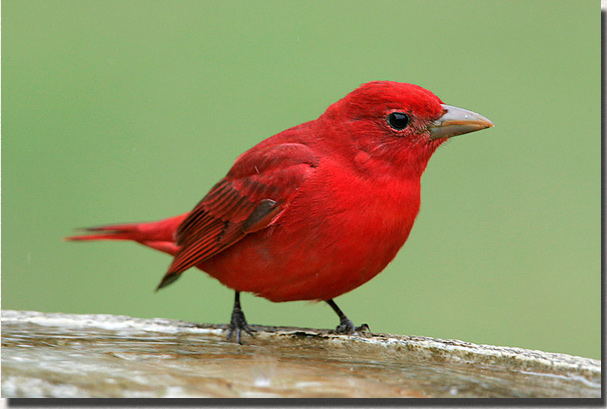
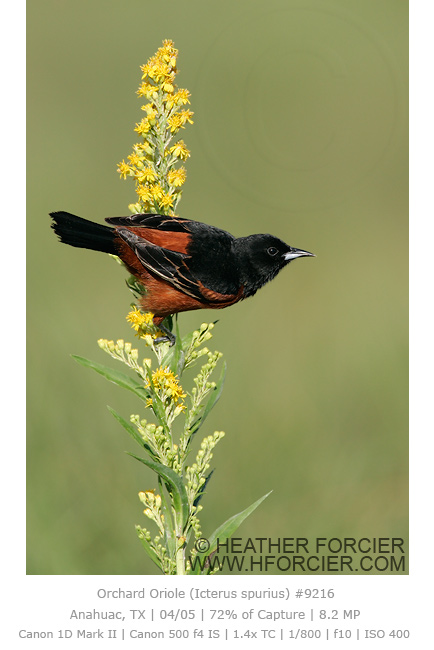
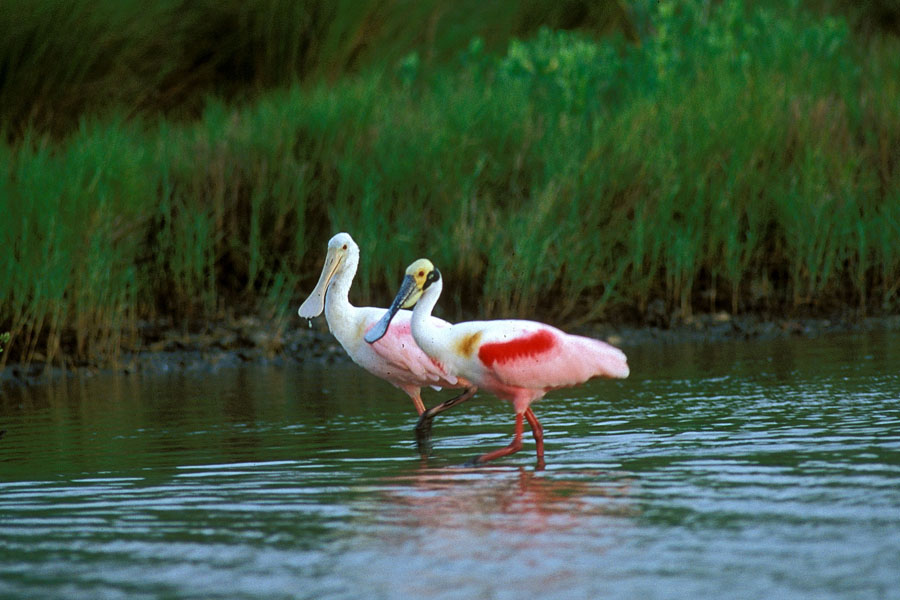
This past weekend, we went on a long-awaited trip to the upper Texas coast to see some migrating birds. The songbirds weren't as diverse as expected, but its hard to complain when we were constantly seeing Scarlet Tanagers, Summer Tanagers, Rose-breasted Grosbeaks, Blue Grosbeaks, Baltimore Orioles, and Orchard Orioles. We also saw really neat looks at Roseate Spoonbills, Purple Gallinules, and even a secretive Least Bittern. Unfortunately, I don't have the right camera to capture those beauties. But here are some consolation prizes.


We got up early and were rewarded with a beautiful sunrise on our way to the coast.


We saw a number of cool serpents, but my favorite was probably this Western Cottonmouth (Agkistrodon piscivorus leucostoma). It put on a nice show for us, including flattening itself and showing the strikingly white mouth for which it gets its name.


We went night driving for more snakes, but didn't see any. However, we did see my first wild Green Treefrogs (Hyla cinerea)...


...and this neat little fiddler crab (Uca spp.).


These are the first American Avocets (Recurvirostra americana) I have seen in breeding plumage (some are still in molt). Also in photo: Reddish Egret (Egretta rufescens), Brown Pelican (Pelacanus occidentalis), American White Pelican (Pelecanus eyrthrorhynchos), and Willet (Catoptrophorus semipalmatus).

3.12.2007

Rio Grande Valley Trip

Sarah and I went with our friend Billi on a short but exciting trip to the southernmost part of Texas. We focused on birds, but enjoyed a lot more. We identified about 130 species of birds on the 2.5 day trip, and 33 of them were lifers for me.


A bird that I'd been looking forward to seeing since the first time I saw it in a fieldguide, the Green Jay (Cyanocorax yncas) was every bit as beautiful as I expected.


This happened to be the nearest of a few American Alligators (Alligator mississippiensis) that we were fortunate enough to see at Aransas National Wildlife Refuge, where we also got to see the endangered Whooping Cranes (Grus americana) on their wintering grounds.


These Texas leaf cutting ants (Atta texanus) were an unexpected treat at our first campsite, on the Rio Grande in Salineno, TX.


I thought it fitting to have our first sighting of the Rio Grande Leopard Frog (Rana berlandieri) on the Rio Grande (their range extends over 300 miles from the Rio Grande).


Definitely one of my favorites from this trip, this Texas Tortoise (Gopherus berlandieri) was right out in the open, munching on grass at Bentsen Rio Grande State Park.