Showing posts with label Texas. Show all posts

9.04.2011

Razorback Musk Turtles in TX


Razorback Musk Turtle (Sternotheros carinatus)

5.19.2008

March Texas trip

Over Easter weekend, Sarah and I were able to join our friends Brendan and Billi for a short trip to the lower Rio Grande valley of Texas. This was our second time in the area, and it was great to be back.

The following three photos are of 1) a female Barn Owl (Tyto alba) incubating eggs on a ledge in an old well, 2) the same owl perched on the far wall from it's nest, with a 5' Western Diamondback Rattlesnake (Crotalus atrox) resting on a slanted board below, and 3) the owl's eggs where it had been sitting earlier.


This is one of the beautiful and large Blue Spiny Lizards (Sceloporus serrifer) that we saw.


This is the first of three Western Diamondback Rattlesnakes that we were to see on our trip.


6.20.2007

Patty Griffin LIVE!

The weekend before we left Texas, Kelly and I got to see Patty Griffin, one of my favorite musicians, performing live in her hometown of Austin, TX! It was an amazing concert, although they didn't allow cameras into the venue...so I don't have footage of the show we were at, but I've included a video from a different show of her playing "No Bad News" from her brand new album, Children Running Through.

One of the highlights of the night was meeting the couple standing next to us throughout the concert. They are kindreds. Check out their blog, Fools that Dream, for some great photos and thoughtful commentary on the beauty and intricacy of "ordinary life."

6.09.2007

Late season netting

As we're nearing the end of the season, the birds are not maintaining their breeding territories, so we've been moving from target netting specific birds to a more general netting strategy. Consequently, we're more likely to catch more than just Golden-cheeked Warblers.


The Black-capped Vireo (Vireo atricapillus) is the other federally endangered bird species that breeds on Fort Hood. I've gotten to see a few of them, but it was a real treat when I caught one this week. This is a 2nd year male.


This is a White-eyed Vireo (Vireo griseus). They're one of the most common birds on the fort, and they have a lot of personality. They don't usually poof up their head feathers this way, but this one's patience with me was waning, and he gave me a good bite on the knuckle right after I took his picture. If you zoom in on this photo, you can see the "hooked" bill that is typical of vireos.

6.07.2007

Around the (Big) Bend

Kelly and I have been excited to visit Big Bend National Park since we knew we were coming to Texas, and last weekend, we finally had the chance to go! Our friend Kirk came down and went with us, and we spent four days camping, hiking and birding around the park, including an inadvertent 18-mile hike in one day! (We had prepared for 10 miles up and down a mountain. We then decided to go on a "shorter" hike later that evening, but our path ended up winding around for another eight unexpected miles, and we had to book it in order to make it back before dark. Needless to say, we were completely exhausted.) Kelly was excited to see the Colima Warbler, whose only North American population is at the top of the Chisos Mountains (hence our original 10-mile hike). We also got to see a Lucifer Hummingbird, which is another Big Bend specialty. All in all, Kelly got more than 20 birds to add to his life list.

One of the best experiences all weekend was finding two owls on our last night in the park. We got so close to them that we were even able to snap a few photos! I think they were disoriented by our lights, so they just sat and stared at us for a few long minutes before we decided to stop bothering them.


The sparrow-sized Elf Owl is the world's smallest owl. It's only 5 3/4 inches long from head to tail! It was so cute and curious when we spotlighted it in this tree just a few feet from our tents.


This Western Screech Owl is also a little cutie. Every time this one or its mate let out a hoot, it's feathers would fluff up at its throat and its wings would flare out just a bit. We could barely tear our eyes from it.


This broad-banded copperhead was on the road at Fort Hood, where we went night driving for snakes before leaving on our trip. It's coloration is more reddish-orange overall than the gray and brown northern copperheads we're used to seeing in Indiana.


This young individual exhibits less orange coloration, and a brighter yellow tail tip that is typical in juvenile snakes in the genus Agkistrodon. They use it to lure potential prey.


Kelly was excited to see this Couch's spadefoot toad on the road on our way into the park.


Since it was about 100 degrees in Big Bend while we were there, and since we had gotten into the park so late the night before, I got sleepy after eating a peanut butter & jelly sandwich while waiting for pairs of Gray Hawks and Common Black Hawks to fly by (we had been tipped off by the park ranger that it was a consistent spot to see them). Anyway, I laid my head down on the picnic table for a few minutes, and I guess it was just long enough for the circling vultures to either think I looked tasty, or to think I wouldn't bother them if they tried to steal the rest of our food!


Our unexpectedly long hike after our mountain climb at least brought us to some gorgeous scenery. This is called "The Window," and we saw it just as the sun was setting behind the mountains...and then we had to race four miles back to camp before all our light was gone! :)

5.12.2007

Texas in May


The year's second brood of Mourning Cloaks (Nymphalis antiopa) are starting to emerge. There might be flashier butterflies, but this is definitely one of my favorites.


Sarah and I went out one night to see breeding amphibians. We saw some neat species, but the Gulf Coast Toads (Bufo nebulifer) were the most entertaining.


The Prickly Pear Cactus (Opuntia sp.), which is all over the place, has been blooming. There is some color variation across plants, but this all yellow form is the most common.


There's something atmospheric about the silhouette of a dead tree full of vultures.


Sarah and I found this Common Snapping Turtle (Chelydra serpentina) crossing the road. It takes many years for them to get this large, and it's a real shame that so many are killed on roads. In these long-lived and slowly-maturing species, even a small increase in percentage of deaths in reproductively mature adults can cause considerable population declines. I used to pick them up by the tail, until I learned that this can cause severe spinal injury to the animal. I'm holding this one by the carapace (top of shell) just above the hind legs.

4.29.2007

Some neat stuff from this week

As the seasons progress, new waves of wildflowers replace or add to the ones preceding them.


Sarah and I were excited to see our first blooming Lace Cactus(Echinocereus reichenbachii).


This Indian Paintbrush (Castilleja sp.) had great color, and stood out among the more common flowers in the area.


The American Lady (Vanessa virginiensis) is usually seen with open wings from above, which are mostly orange and black. I included this photo because I think the more intricately patterned and colored underside is often unnoticed or underappreciated.


This is an Ironclad Beetle (Zopherus nodulosus) that I found under a log. I like finding oddballs like this.

4.26.2007

Anuhuac NWR, High Island, and Bolivar Peninsula

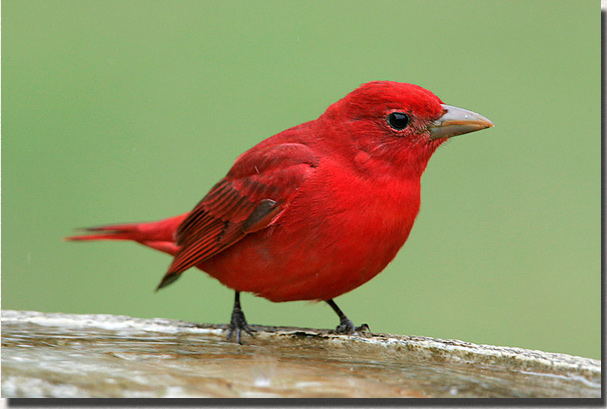
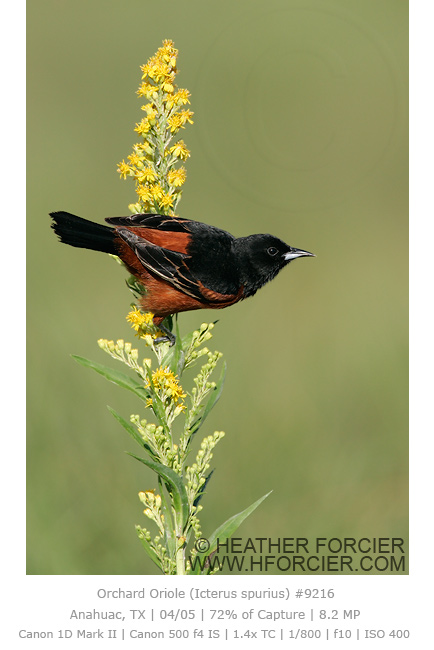
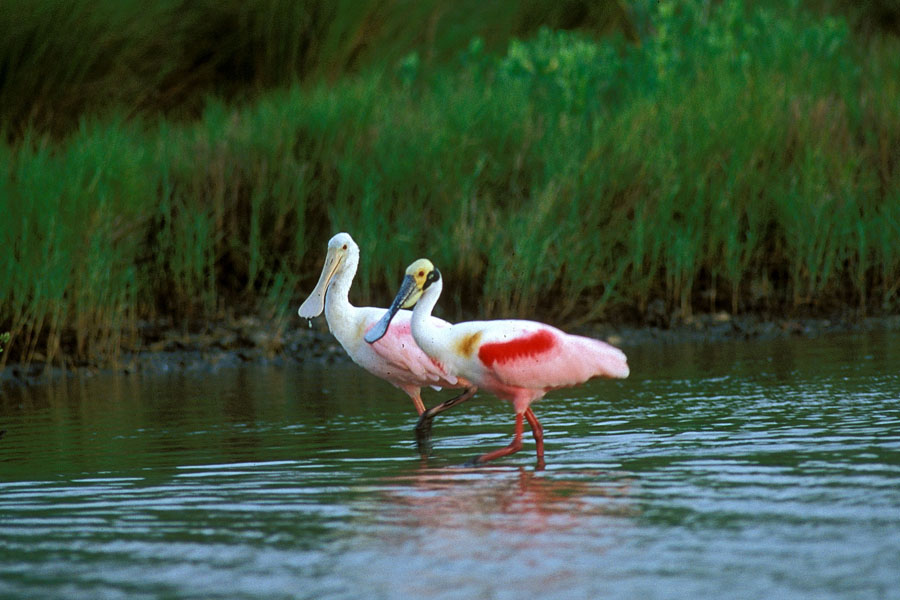
This past weekend, we went on a long-awaited trip to the upper Texas coast to see some migrating birds. The songbirds weren't as diverse as expected, but its hard to complain when we were constantly seeing Scarlet Tanagers, Summer Tanagers, Rose-breasted Grosbeaks, Blue Grosbeaks, Baltimore Orioles, and Orchard Orioles. We also saw really neat looks at Roseate Spoonbills, Purple Gallinules, and even a secretive Least Bittern. Unfortunately, I don't have the right camera to capture those beauties. But here are some consolation prizes.


We got up early and were rewarded with a beautiful sunrise on our way to the coast.


We saw a number of cool serpents, but my favorite was probably this Western Cottonmouth (Agkistrodon piscivorus leucostoma). It put on a nice show for us, including flattening itself and showing the strikingly white mouth for which it gets its name.


We went night driving for more snakes, but didn't see any. However, we did see my first wild Green Treefrogs (Hyla cinerea)...


...and this neat little fiddler crab (Uca spp.).


These are the first American Avocets (Recurvirostra americana) I have seen in breeding plumage (some are still in molt). Also in photo: Reddish Egret (Egretta rufescens), Brown Pelican (Pelacanus occidentalis), American White Pelican (Pelecanus eyrthrorhynchos), and Willet (Catoptrophorus semipalmatus).

4.15.2007

Neat Texas Critters


This is the Red-headed subspecies of the Giant Desert Centipede (Scolopendra heros castaneiceps). This is one of the largest centipede species in the world, with adults topping out at over eight inches. I think that anyone who can get past their aversion to "creepy crawlies" will recognize this as a very beautiful part of God's creation.


Here's a risk-free opportunity for you to get a good look at a hornet. I've always thought they have great faces; kind of a cross between an alien face and a cool motorcycle helmet.

4.05.2007

Photos from the past couple days


This is an Eight-spotted Forester Moth (Alypia wittfeldii). They really are striking.


This is a Reakirt's Blue (Hemiargus isola).


This male Plains Clubtail (Gomphus externus) was a new dragonfly for me. It posed nicely.


I put this Antlion larva (Myrmeleon sp.) on here for my brother Alex. Alex, you know why.

4.01.2007

Random stuff I liked seeing


This beetle is aptly called a caterpillar hunter (Calosoma scrutator). It's fun to watch them catch the light as they search and find caterpillars eating the fresh spring foliage.


Texas has great wildflowers. This one is in the iris family.


This Rough Green Snake (Opheodrys aestivus) is one of three I've been fortunate enough to see here so far.


I just can't help but to like this little oak seedling.