Showing posts with label birds. Show all posts

10.17.2012

Nesting nocturnal birds

When people think of nocturnal birds, owls are usually the first, and often the only birds that come to mind. In addition to owls, birds from the family Caprimulgidae add their voices to the fascinating tapestry of night time sounds. There are two species that breed in the Florida panhandle.


Female Common Nighthawk (Chordeiles minor) incubating eggs
This video shows the rapid throat movements (gular fluttering) in the nighthawk's throat that help her stay relatively cool in the heat of the day while incubating her eggs. Lesser nighthawks (Chordeiles acutipennis) have apparently been observed sustaining this thermoregulatory behavior for eight hours a day on very hot days!

Common Nighthawk (Chordeiles minor) eggs


Common Nighthawk (Chordeiles minor) hatchling

Common Nighthawk (Chordeiles minor) Fledgling


Female Chuck-will's-widow (Caprimulgus carolinensis) incubating eggs


Chuck-will's-widow doing broken wing display and gaping when I approached her eggs

Chuck-will's-widow (Caprimulgus carolinensis) eggs

Chuck-will's-widow (Caprimulgus carolinensis) fledgling

6.04.2012

New camera

After the better part of a year of not having a camera due to mine being inundated with salt water, we finally have a new camera!  It's our first DSLR, and I have much to learn.  I've lucked out a few times already, and am enjoying learning.  I hope you enjoy these photos as well, and I'm all ears on tips you might have for me!
Bearded Grass-pink (Calopogon barbatus)

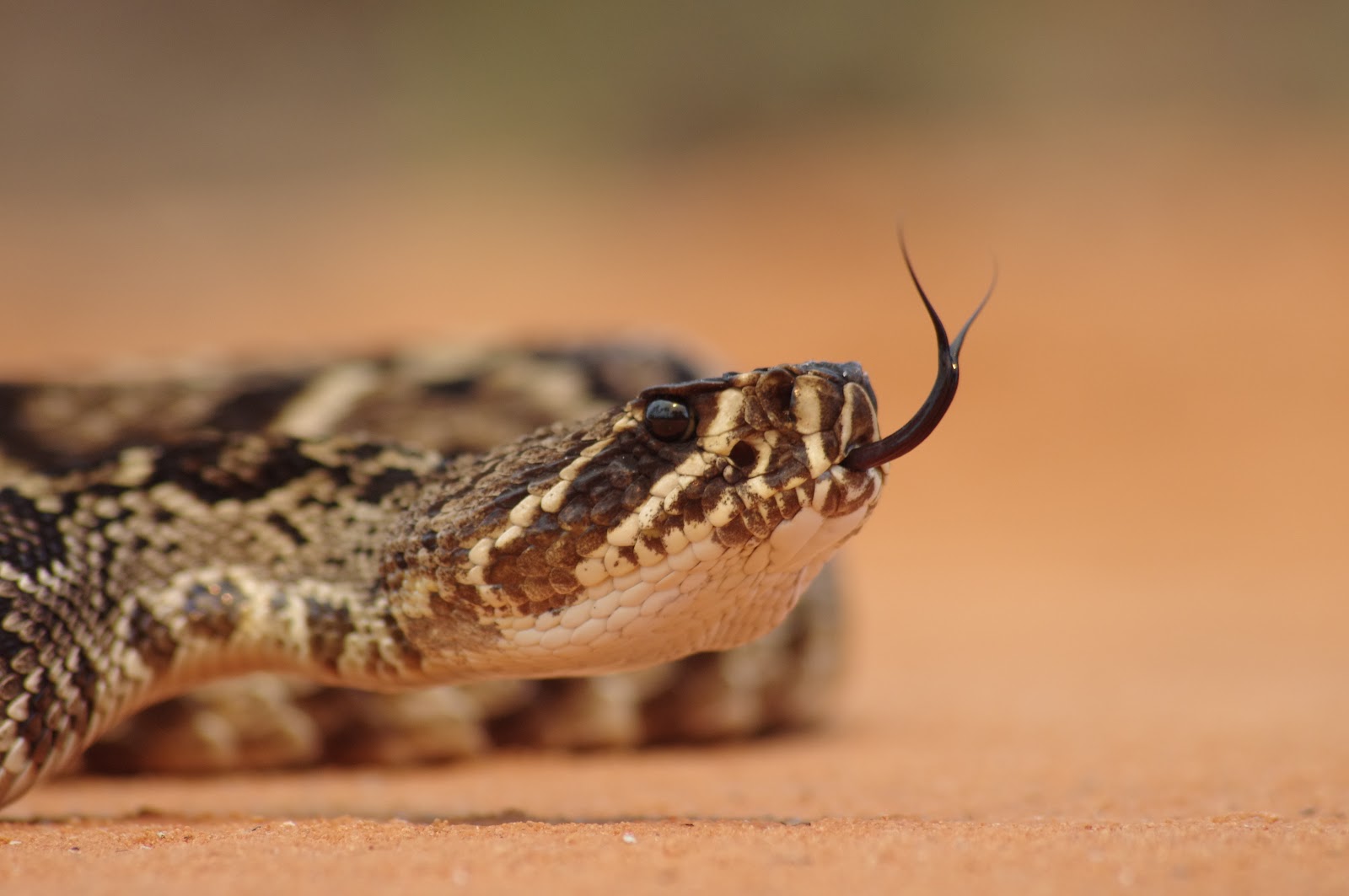
Eastern Diamondback Rattlesnake (Crotalus adamanteus)

Whitetop Pitcherplant (Sarracenia leucophylla) flower

Gulf Crayfish Snake (Regina rigida sinicola)

Pale Shoulder Pitcherplant Moth (Exyra semicrocea)
in Whitetop Pitcherplant (Sarracenia leucophylla)

Black Skimmer (Rhynchops niger) pair in courtship flight

Halloween Pennant (Celithemis eponina)

Gulf Purple Pitcherplant (Sarracenia rosea) flower

Eastern Diamondback Rattlesnake (Crotalus adamanteus) in defensive posture

Whitemouth Dayflower (Commelina erecta)

American Oystercatcher (Haematopus palliatus)

Southern Leopard Frog (Lithobates sphenocephalus utricularius)

Little Ladies'-tresses (Spiranthes tuberosa)

11.24.2010

Non-herp animal encounters


Northern Saw-whet Owl (Aegolius acadicus)

My friend Lori set up an opportunity to capture and band these fantastic little owls while we were up in Virginia. I had assisted in this (mostly as a tourist) in Indiana one year, but this was my first time removing the owls from the nets and banding and measuring them myself.


American Robin (Turdus migratorius)

This robin just looked stuffed beneath an American persimmon (Diospyros virginiana) tree that had dropped a lot of ripe fruit. I partook of some of the fruit and then photographed this bird that may have been too full to be very concerned with my proximity!


Virginia Opossum (Didelphis virginiana)

Even though these animals look like oversized rats, I really enjoy seeing them. Interestingly, they are the only marsupial that occurs in the U.S.


Unknown fungus. I just liked how these looked.

9.26.2010

Long-tailed Jaeger


intermediate juvenile Long-tailed Jaeger (Stercorarius longicaudus)

In the past year, mostly since Elliott was born, I've really scaled back my hobby of birding to the level of only opportunistically enjoying birds that happen to be near me when I'm outside for reasons other than birding. Recently, I saw the jaeger in the photos above while pompano fishing on the beach in Escambia County, FL with my friend Steve and my Uncle Jim and Aunt Gayle.

I have relatively little experience with pelagic species, so needed some help with the identification of this potentially confusing juvenile jaeger. My friends Bob and Lucy were very helpful in correctly identifying this bird. I'll include some points that Lucy made below, as well as one additional point made by another birder experienced in jaeger identification.

1. very strong, crisp-edged barring of the undertail coverts. Parasitic has weak, blurry barring, Pom has strong, but bill is not Pomarine.

2. virtually no pale tips to the wing tips; Parasitic has pale tips to the wing

3. bill shape (gonys incl) matches Long-tailed and has a hook at the tip more dominant in Long-tailed than in Parasitic

4. amount of dark on the bill looks to be about 40-50% dark, which is just right for LT

5. barring on the back is crisp and white, not buffy as in Parasitic or Pomarine.

4.18.2010

Owls

One small part of my job involves going to various places at night to listen for calling frogs and toads. While this is interesting on its own, I really like all the other things that I can hear and sometimes see along the way. Last night, I had the pleasure of seeing two owls.


Eastern Screech Owl (Otus asio)


Barred Owl (Strix varia)


profile

11.14.2009

A tired loon

Tropical Storm Ida didn't hit here with the ferocity that was originally predicted, but it did churn things up for a while, and made things a bit more difficult for some of the animals that can't retreat into a house. This Common Loon, which may have recently arrived in Florida from its breeding grounds up North, had apparently been worn out by all the wind and churning water and worked its way up onto the beach, where it was exposed to predators. While I understand letting nature take its course, I decided to take this bird across the dunes to the protected bay side of the barrier island where the water was calm, and where there were many small bait fish for it to eat. Shortly after we released it, it began looking under water to search for food.


Common Loon (Gavia immer)
The placement of the loon's legs make it an excellent swimmer, but a very awkward walker.


Willet (Catoptrophorus semipalmatus)
Large shorebirds that are fun to watch


House Sparrow (Passer domesticus)
I've been noticing doves and House Sparrows like this one taking advantage of acorns that have been crushed by cars and pedestrians, when they might otherwise not be able to eat them due to their inability to crack the hard outer shell.


Our local treefrogs' breeding season ended a few months ago, and without the loud choruses it sometimes seems as though the frogs simply disappear for a few months. Fortunately, the frogs don't disappear, and it's nice to still see one once in a while.


Pine Woods Treefrog (Hyla femoralis)


Green Treefrog (Hyla cinerea)

11.09.2009

Amorous feral hogs and some nice birds

I recently witnessed some wild boar (Sus scrofa) behavior that I hadn't seen before. I wonder what they could be up to...


Sarah and I went to Fort Pickens with our friend Don Ware to try to see the third Green-tailed Towhee ever to be reported in Florida. After a couple hours of patient waiting, this striking little bird tentatively emerged from the brush.


Green-tailed Towhee (Pipilo chlorurus)

Along with the towhee, we enjoyed seeing some other birds in the area.


White-winged Dove (Zenaida asiatica)


Great Blue Heron (Ardea herodias)

8.08.2009

Catching up with some half year highlights

Here are some memorable (for me) little gems from my past few months.


My friend Kirk spotted one of these Okefenokee Zale Moth larvae (Zale perculta) while we were out looking for other things. It turned out to represent a ~100 mile extension to their previously known range. They feed exclusively on Climbing Fetterbush (Pieris phyllyreifolia), which is a pretty neat plant that you can learn more about HERE.


This Portuguese Man-O-War (Physalia physalis) is doomed to be churned in the surf and washed up on the beach. They float at the surface, have no ability to propel themselves, and are completely at the mercy of where the wind and surface currents direct them.


I was fortunate to be involved in the capture of this Black-banded Sunfish (Enneacanthus chaetodon) while seining for Greater Sirens (Siren lacertina). This beautiful little species hadn't been documented in Florida for many years, and my friend John recognized it for the special find it was.


While following a group of Red-cockaded Woodpeckers (Picoides borealis), I flushed up this young Red-shouldered Hawk (Buteo lineatus) which had just caught a Southern Black Racer (Coluber constrictor priapus). I took this low quality photo through a scope mounted on a gun stock, so the quality isn't very good, but I still like it.


This Oldfield Mouse (Peromyscus polionotus) was caught in a funnel trap set out to sample herps. I rarely see more than a glimpse of small mammals unless they're being trapped for, so this was a treat to see.


I happened upon this domesticated Muscovy Duck hen tending her recently hatched young back in a swampy area while looking for sirens. I'm including this photo for my mother, who has a special place in her heart for domesticated waterfowl. Also, the cute factor is admittedly pretty high.