5.02.2010

Pea family (family Fabaceae)

I'm going to put some effort into familiarizing myself with our local legumes this year. Some of these will be introduced species, but there are many native ones, so I shouldn't get bored. I'll keep adding to this post as I find and identify more species.


Sensitive Brier (Mimosa quadrivalvis var. angustata)


Partridge Pea (Chamaecrista fasciculata)


Skyblue lupine (Lupinus diffusus)


Lady lupine (Lupinus villosus)


Sundial lupine (Lupinus perennnis)


Buckroot (Pediomelum canescens)


Hairy Florida Wild Indigo (Baptisia calycosa)


Pineland baptisia (Baptesia lanceolata)


Goat's rue (Tephrosia virginiana)


Sidebeak Pencilflower (Stylosanthes biflora)


Dollarleaf (Rhynchosia reniformis)


Royal Snoutbean (Rhynchosia cytisoides)


Spurred Butterfly Pea (Centrosema virginianum)


Mimosa (Albizia julibrissin) non-native


Chinese Wisteria (Wisteria sinensis) non-native


Rattlebox (Sesbania punicea) non-native

4.25.2010

Spring flowers part 2


Mountain azalea (Rhododendron canescens)


Osceola's plume (Stenanthium densum)


Swamp sneezeweed (Helenium pinnatifidum)

4.18.2010

Owls

One small part of my job involves going to various places at night to listen for calling frogs and toads. While this is interesting on its own, I really like all the other things that I can hear and sometimes see along the way. Last night, I had the pleasure of seeing two owls.


Eastern Screech Owl (Otus asio)


Barred Owl (Strix varia)


profile

4.09.2010

Spring flowers part 1


Yellow star grass (Hypoxis hirsuta)


Blue-eyed grass (Sisyrinchium sp.)


Dwarf violet iris (Iris verna)


Fetterbush lyonia (Lyonia lucida)


Carolina frostweed (Helianthemum carolinianum)


Florida anisetree (Illicium floridanum)


Trailing phlox (Phlox nivalis)


Flowering dogwood (Cornus florida)


Hairy-flower spiderwort (Tradescantia hirsutiflora)


Bluejacket (Tradescantia ohiensis)


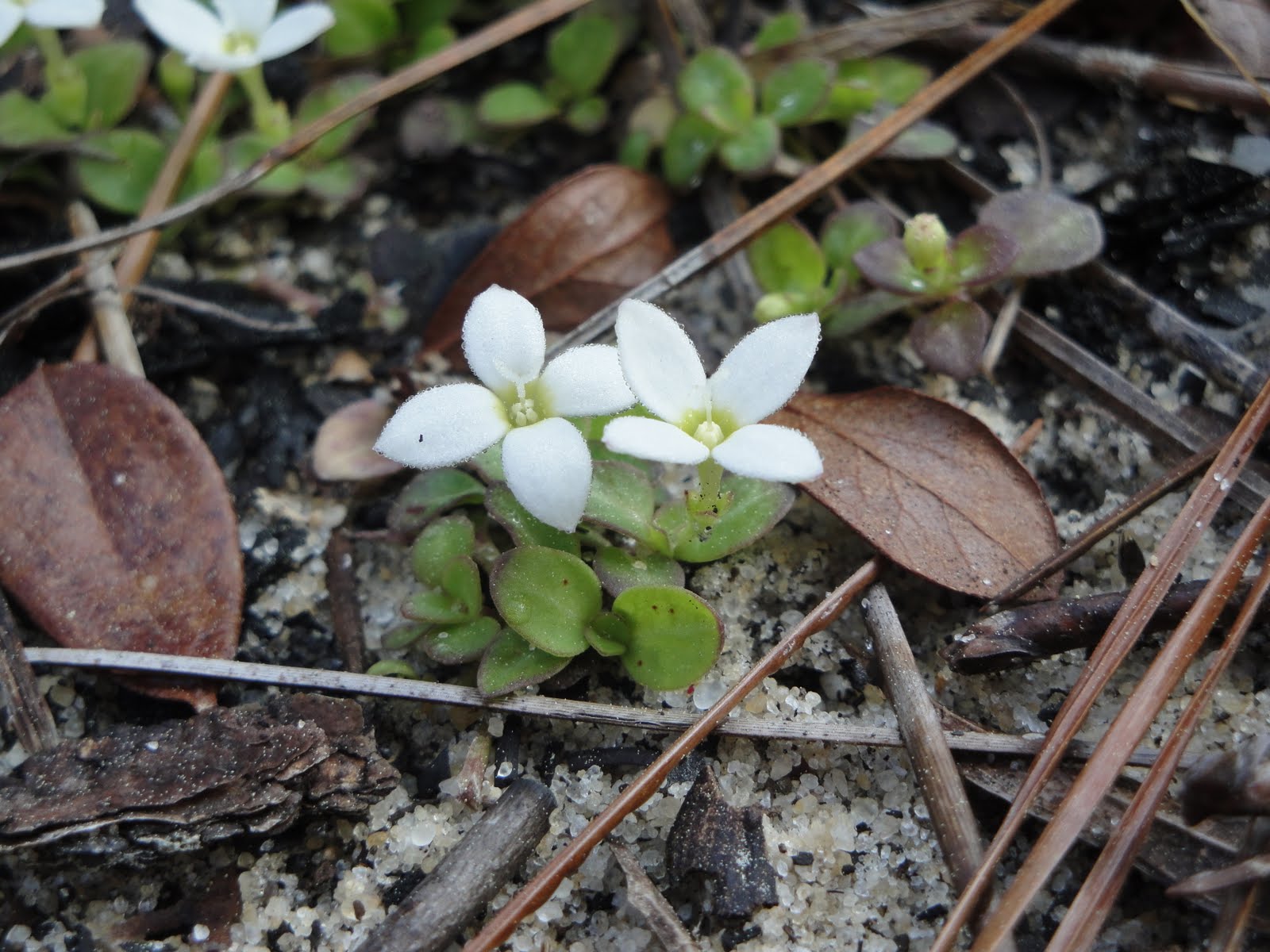
Roundleaf bluet (Houstonia procumbens)


Early blue violet (Viola palmata)


Primrose-leaved violet (Viola primulifolia)


Bog white violet (Viola lanceolata)


Evening trumpetflower (Gelsemium sempervirens)

4.08.2010

Spring serpents

It's that time of year again when all sorts of interesting things come out of the woodwork and move around where I can see them. After a winter of rarely seeing any snakes, it's refreshing and exciting to begin seeing them again.


Eastern Ribbon Snake (Thamnophis sauritus sauritus)


Rough Earth Snake (Virginia striatula)


Dusky Pygmy Rattlesnake (Sistrurus miliarius barbouri)


Eastern Coral Snake (Micrurus fulvius)


Not the face you'd want to see coming around the corner if you were a small snake or lizard


2.21.2010

Breaking a long blogging fast.

There is a rare species of snake that I've wanted to see more than any other species for years. It is the Eastern Indigo Snake. It may still occur in low numbers where I work on Eglin Air Force Base, but it hasn't been documented from there in over a decade. I've gone to a couple different locations that I've heard still have fairly healthy populations, but after many fruitless hours of searching, this snake begins to take on a phantom-like persona in my mind. Recently, my friend Brandon and I went on one more search for this elusive serpent. Delayed gratification leads to satisfying success!


Eastern Indigo Snake (Drymarchon couperi)


The individual that we found looked to be over 6.5' long, and almost as thick around as my forearm. It was basking near this Gopher Tortoise (Gopherus polyphemus) burrow.


At first glance, this snake looks to be simply a large, shiny black snake, but it has some beautiful iridescence in the black, as well as some neat reddish tones around the face.


Here's a close-up of part of the snake where you can see the individual scales and the skin between them.


This snake had probably shed very recently, and had such clear eyes. If you zoom in on this photo you can see trees, sky, and the sun reflected in them.